
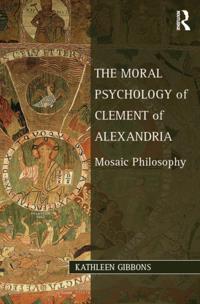

In The Moral Psychology of Clement of Alexandria, Kathleen Gibbons proposes a new approach to Clement's moral philosophy and explores how his construction of Christianity's relationship with Jewishness informed, and was informed by, his philosophical project. As one of the earliest Christian philosophers, Clement's work has alternatively been treated as important for understanding the history of relations between Christianity and Judaism and between Christianity and pagan philosophy. This study argues that an adequate examination of his significance for the one requires an adequate examination of his significance for the other.While the ancient claim that the writings of Moses were read by the philosophical schools was found in Jewish, Christian, and pagan authors, Gibbons demonstrates that Clement's use of this claim shapes not only his justification of his authorial project, but also his philosophical argumentation. In explaining what he took to be the cosmological, metaphysical, and ethical implications of the doctrine that the supreme God is a lawgiver, Clement provided the theoretical justifications for his views on a range of issues that included martyrdom, sexual asceticism, the status of the law of Moses, and the relationship between pine providence and human autonomy. By contextualizing Clement's discussions of volition against wider Greco-Roman debates about self-determination, it becomes possible to reinterpret the invocation of "e;free will"e; in early Christian heresiological discourse as part of a larger dispute about what human autonomy requires.
Handlekurven din
Alle bestillinger vil bli brukt
USD.
Innholdet i din nåværende handlekurv vises
CYN,
Du vil bruke
USD
Beregnet med siste valutakurs.
utsolgt
Noen produkter er ikke lenger tilgjengelige. Handlekurven din er oppdatert.
Har du en rabattkode?

tupp

Fraktforsikring
Delsum
Rabatt
Denne rabattkoden kan ikke brukes i forbindelse med andre kampanjer eller rabatttilbud.
total
Beregn avgifter og fraktkostnader ved betaling.
Kommentar